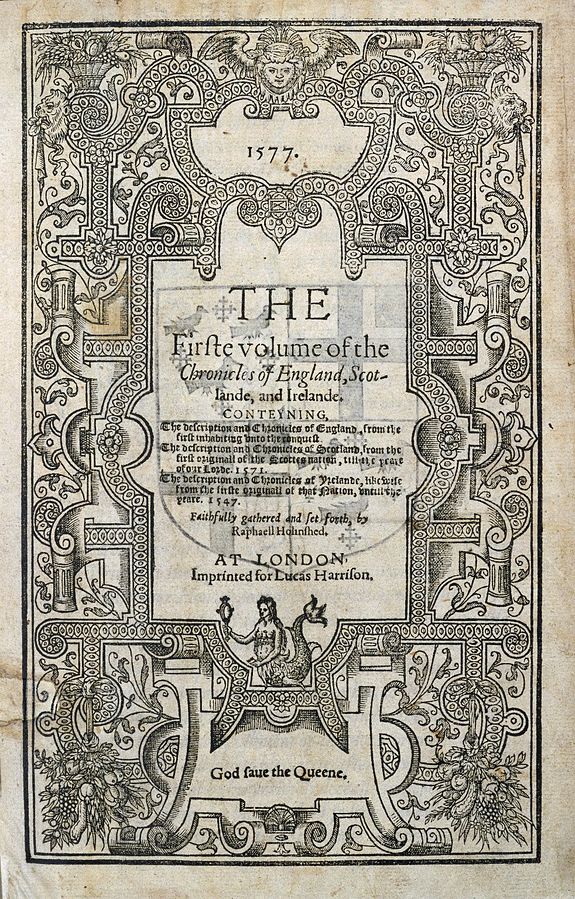
A photo of the first edition of Raphael Holinshed's Chronicles of England, Scotland, and Ireland published in 1577.
In Macbeth, Shakespeare took inspiration from existing historical sources and literary works. Among the most notable influences on Macbeth was the Chronicles of England, Scotland, and Ireland by Raphael Holinshed. This work described the reigns of various monarchs in British history. Shakespeare based the Macbeth character off the Macbeth mentioned in Holinshed's work. The Macbeth mentioned in Chronicles of England, Scotland, and Ireland by Raphael Holinshed was a Scottish Nobleman who became the King of Scotland after defeating King Duncan in battle and was portrayed as a capable and respected ruler. In contrast, the Macbeth used by Shakespeare was drastically altered and was driven by ambition and influenced by supernatural forces like witches.
A photo of the first edition of Raphael Holinshed's Chronicles of England, Scotland, and Ireland published in 1577.
King James I, a major monarch during Shakespeare's time, was a significant influence on Macbeth. Since, James I was a big supporter of Shakespeare's acting company, James' interests and beliefs had large impacts on the play. James I's fascination with witchcraft and the supernatural, as shown in his book Deamonologie, which encouraged the practice of witch hunting, is demonstrated through the depiction of magic and witches in Macbeth.
Furthermore, Macbeth was likely created to appeal to James I's lineage. Banquo, who is portrayed in Macbeth as noble and virtuous, was believed to be an ancestor of the Stuart line which King James belonged to. By depicting Banquo favorably, Shakespeare flattered the king and reinforced the legitimacy of James I as the ruler of England and Scotland.
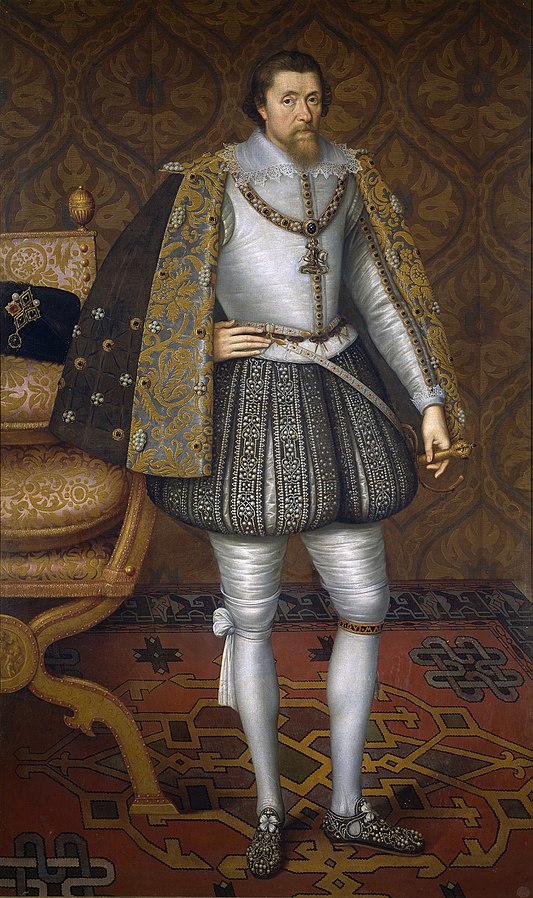
A portrait of King James I of England who had a significant influence on Shakespeare and Macbeth.